GPA Calculation Examples for Beginners

GPA means Grade Point Average. It is a number that shows how well a student is doing in studies. Instead of looking at marks or grades for each subject, GPA combines everything into one clear score. This makes it easy for students, teachers, and schools to understand overall performance.
For beginners, GPA may look confusing at first. But in reality, GPA is just a simple way to turn grades into numbers. A higher GPA means better performance, while a lower GPA means there is room to improve. Once you learn the basics, GPA becomes easy to understand and use.
Who Should Learn GPA Calculation?
GPA calculation is important for all students, especially beginners. School students, college students, and university students all use GPA at some point. If you are new to GPA, learning it early can save you from stress later.
Students who want scholarships, good grades, or admission to higher studies should understand GPA calculation. Parents can also benefit from learning GPA so they can guide their children better. Knowing GPA helps you track progress and plan your studies in a smart way.
Grades Used in GPA
Grades are the starting point of GPA calculation. Most schools use letter grades like A, B, C, D, and F. Each grade shows how well a student performed in a subject. An A grade means excellent work, while a C grade means average performance.
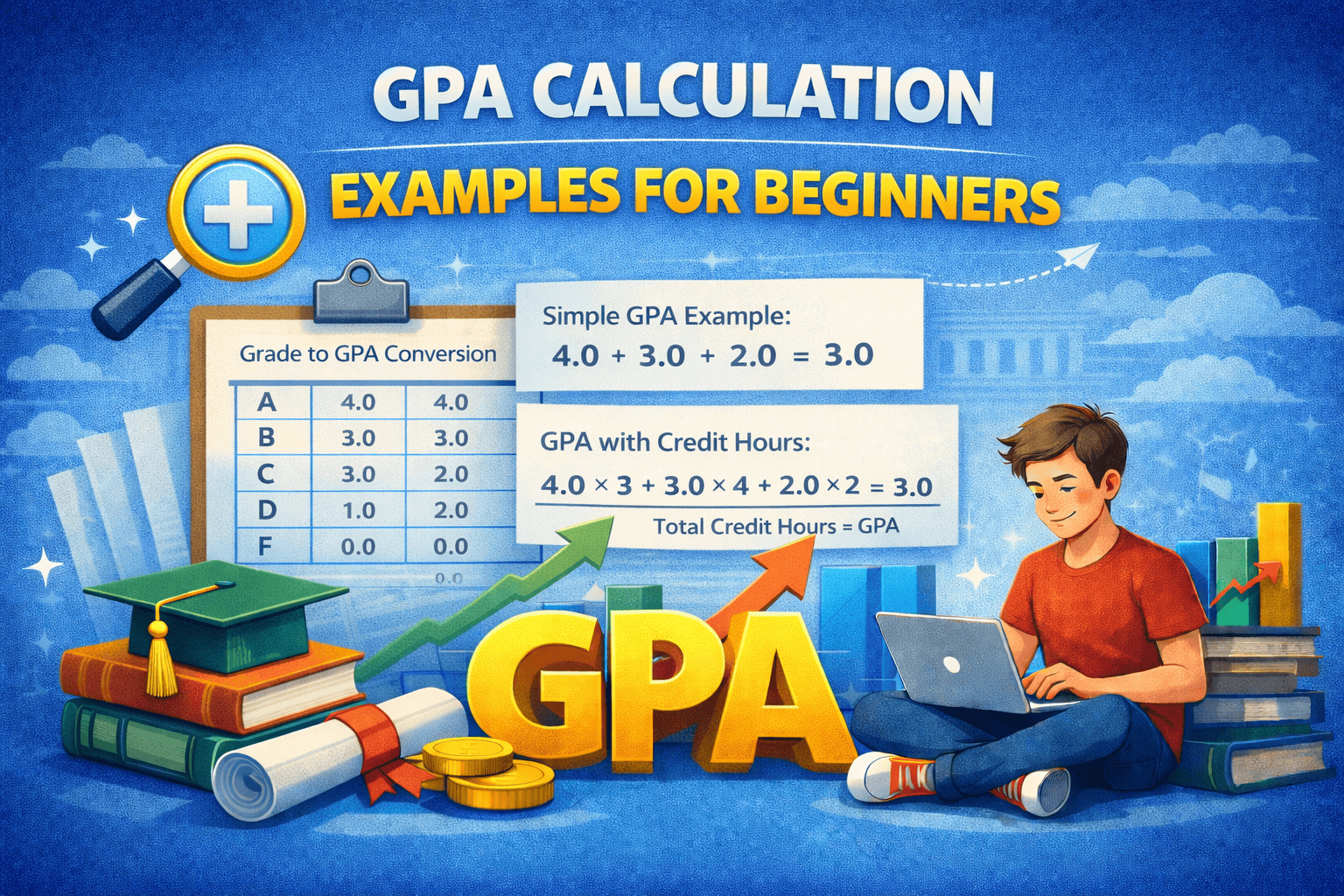
These grades are later changed into numbers called grade points. For example, an A grade often becomes 4.0 points, a B becomes 3.0 points, and so on. These grade points are used to calculate GPA. Understanding grades is the first step for beginners.
Credit Hours Explained
Credit hours tell us how important a subject is. A subject with more classes or more study time usually has more credit hours. A lighter subject has fewer credit hours. Credit hours help decide how much each subject affects GPA.
For beginners, this is very important to understand. If a subject has more credit hours, it has more impact on GPA. This means doing well in major subjects can improve GPA a lot. Credit hours make GPA fair and balanced.
Simple GPA Example
Let us start with a very simple GPA example for beginners. Imagine a student studies three subjects in one semester. The student gets grades A, B, and C in these subjects. First, these grades are changed into grade points. An A becomes 4.0, a B becomes 3.0, and a C becomes 2.0.
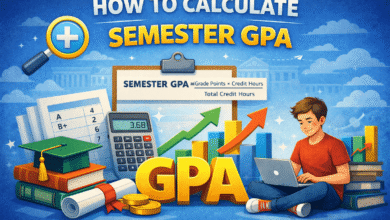
Now add these grade points together. That will be 4.0 + 3.0 + 2.0, which equals 9.0. Since there are three subjects, divide 9.0 by 3. The final GPA will be 3.0. This example shows that GPA is just an average of grade points. For beginners, this is the easiest way to understand GPA.
GPA Example with Credit Hours
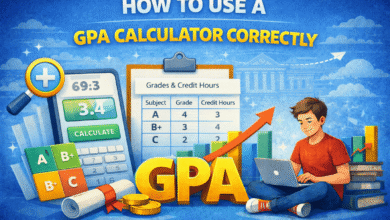
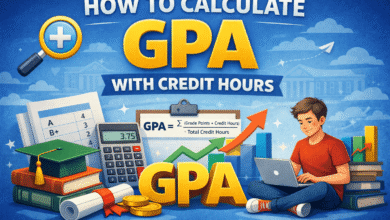
Now let us look at a GPA example with credit hours. Suppose a student has three subjects. Subject one has 3 credit hours with grade A, subject two has 4 credit hours with grade B, and subject three has 2 credit hours with grade C.
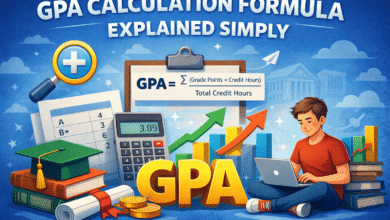
First, convert grades into points. A is 4.0, B is 3.0, and C is 2.0. Next, multiply each grade point by its credit hours. That will be 4.0 × 3, 3.0 × 4, and 2.0 × 2. Add all these results together. Then add all credit hours. Finally, divide total grade points by total credit hours. The number you get is the GPA. This example helps beginners see how credit hours change GPA.
Common Beginner Mistakes
Beginners often make small mistakes while calculating GPA. One common mistake is forgetting to use credit hours. Some students just add grade points and divide by subjects, which gives wrong results when credit hours are different.
Another mistake is using the wrong grade scale. Not all schools use the same grading system. Some beginners also round numbers too early. It is better to round only at the final step. Avoiding these mistakes helps beginners calculate GPA correctly.
Tips to Understand GPA Easily
The best way to understand GPA is by practicing examples. Start with simple examples and then move to credit hour examples. Writing everything on paper also helps avoid confusion. Take your time and do not rush.
Using online GPA calculators can also help beginners check their answers. But learning manual calculation is important too. When beginners understand GPA clearly, they feel more confident about their studies and results.
Conclusion:
GPA calculation becomes easy when beginners learn it step by step. Simple examples help in understanding grades, grade points, and credit hours. Once you understand these basics, GPA is no longer confusing. Learning GPA early helps students plan better and improve their academic performance.
FAQs:
What is GPA for beginners?
It is a simple number that shows overall academic performance.
Is GPA hard to calculate?
No, GPA is easy if you follow simple steps.
Do credit hours matter for beginners?
Yes, credit hours change how much a subject affects GPA.
Can beginners use GPA calculators?
Yes, they are helpful, but learning manual calculation is also important.