GPA Grading System Explained (A, B, C, D, F)

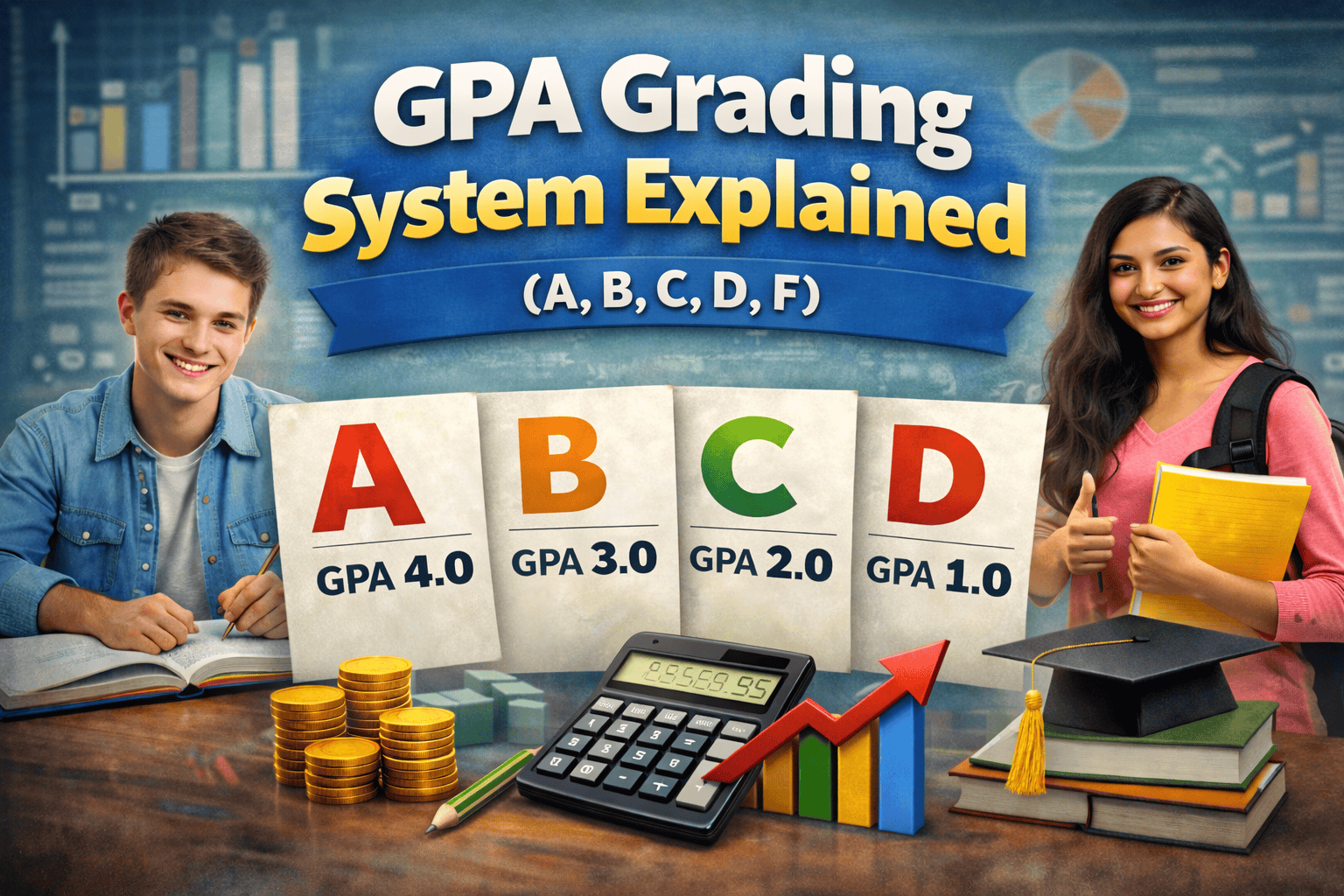
The GPA grading system is used in schools, colleges, and universities to measure how well a student is doing in their studies. Instead of only using marks or percentages, many education systems use letter grades like A, B, C, D, and F. These letter grades help teachers and institutions understand a student’s performance in a simple and clear way. Each grade shows a level of understanding and effort in a subject.
For students, the GPA grading system can sometimes feel confusing, especially at the beginning. Many students worry when they see letters instead of marks. However, once the system is understood, it becomes much easier to follow. The grading system is designed to be fair and to show overall performance, not just one exam result. Learning how this system works helps students plan their studies better and reduce stress.
What Do Letter Grades Mean?
Letter grades are used to describe how well a student has performed in a subject. Each letter has a clear meaning and represents a performance level. These grades are later converted into grade points, which are used to calculate GPA. That is why letter grades are very important in academic life.
In most grading systems, A is the highest grade and F is the lowest. Grades in between show different levels of performance. Letter grades make it easy to understand results at a quick glance. Instead of checking long mark sheets, teachers, parents, and students can understand progress just by looking at the grade. This system is widely used because it is simple and easy to compare.
Grade A: Excellent Performance
Grade A shows excellent academic performance. It means the student has a strong understanding of the subject and has done very well in exams, assignments, and class activities. Students who receive an A grade usually score high marks and show regular effort during the course.
An A grade is often linked with high GPA points. This grade helps students build a strong academic record. Many scholarships, honors programs, and top universities prefer students who have more A grades. However, getting an A requires consistency, good study habits, and proper time management. It is not about one exam but overall performance.
Grade B: Good Academic Level
Grade B represents good performance. It means the student understands most of the subject and performs well, but there may be some small gaps. A B grade is still considered a strong result and is very common among students who study regularly.
Students with B grades usually have a healthy GPA and are doing well academically. This grade shows that the student is on the right track and can improve further with a little more effort. Many students feel satisfied with B grades, but it is also a good motivation to aim higher in future exams. A mix of A and B grades usually leads to a solid GPA.
Grade C: Average Performance
Grade C shows average academic performance. It means the student understands the basic ideas of the subject but may struggle with some topics. A C grade is usually given when marks are not very high but still meet the passing requirement. Many students receive C grades at some point in their studies, and it is not something to panic about.
A C grade does affect GPA, but it does not mean failure. It is often a sign that the student needs to improve study habits or spend more time on weak areas. With better planning and regular practice, students can move from C to B or even A in future semesters. The key is not to ignore this grade but to learn from it.
Grade D: Below Average Result
Grade D means below average performance. It shows that the student has limited understanding of the subject and is very close to failing. In many education systems, a D grade is still a pass, but it is not considered a good result.
A D grade lowers GPA more than a C grade. If a student gets many D grades, it can create academic problems, such as warnings or loss of eligibility for certain programs. This grade is a clear signal that the student needs to take studies more seriously. Extra practice, help from teachers, and better time management can help avoid D grades in the future.
Also Read: What Is CGPA? Difference Between GPA and CGPA
Grade F: Fail and Its Effects
Grade F stands for fail. It means the student did not meet the minimum requirements to pass the subject. This can happen due to low exam scores, missed assignments, or lack of attendance. An F grade has a strong negative effect on GPA.
In many institutions, a subject with an F grade must be repeated. This not only affects GPA but also increases study time and workload. However, an F grade does not mean the end of academic life. Many students recover by learning from their mistakes, improving focus, and performing better in future courses. What matters most is how the student responds after failure.
How Letter Grades Affect GPA
Each letter grade is connected to a grade point value, and these points are used to calculate GPA. Higher grades like A and B add more value to GPA, while lower grades like C, D, and F reduce it. That is why even one low grade can change the final GPA.
Understanding how grades affect GPA helps students make better academic decisions. Students can focus more on important subjects and improve weaker areas. GPA is not only about intelligence but also about planning and consistency. When students understand the grading system, they feel more confident and less stressed.
Conclusion:
The GPA grading system helps students and institutions understand academic performance in a clear way. Letter grades from A to F each have their own meaning and impact on GPA. High grades show strong effort, while low grades highlight areas that need improvement. By understanding this system, students can take control of their studies and work toward better results step by step.
FAQs:
1. Is Grade C a bad grade?
No, Grade C is an average grade. It means the student passed but needs improvement.
2. Can one F grade ruin my GPA?
One F grade can lower GPA, but it can be improved with better grades later.
3. Is Grade D considered a pass?
In many systems, D is a pass, but it is below average and not recommended.
4. Which grade gives the highest GPA points?
Grade A usually gives the highest GPA points.
5. Can GPA improve after low grades?
Yes, GPA can improve with consistent effort and better performance in future courses.